

Are You a Stressaholic? Here’s a Five-Minute Fix
What does it feel like to be in a relaxed state? What triggers me back into a state of stress? What are the signs?
Increasingly over the past couple of years, I’ve been having outbreaks of hives and itchy skin. I finally sat down with an allergist, who gave it to me straight. I am allergic to pineapples, apples, and—get this—anything that touches my skin. Anything that rubs, scratches, or irritates my skin will create the itchy, irritating hives. He said, “Your problem isn’t actually the allergies. It’s stress and anxiety, so I would get that under control if you can.”
Funny. I’ve been trying to get my stress and anxiety under control since I collapsed into a heap of wracking sobs in front of my math teacher in high school because I was in school full time, socializing full time, and working eight-hour days on the weekends, so couldn’t complete my math homework. Ironic, perhaps, that a yoga teacher would struggle so much with stress, but ask any one of us and we will probably tell you that’s how we got into this field in the first place.
It’s not that we are “Type-A” personalities or workaholics. Our culture has been mainlining stress, and we are accidental junkies. We think relaxation is something you do on a vacation that you worked 80-hour weeks for years to “deserve,” and when we see it in everyday life, we recoil in fear and disgust and label it “laziness.”
Yesterday, I noticed a billboard for a coffee shop advertising an even faster way to pay. The image was a coffee mug and a doughnut moving so quickly the doughnut’s sprinkles were flying off. Sitting down for a coffee and a doughnut used to mean a pause from a stressful day, a quiet moment before having to rush off again. Now a “coffee break” is another cog in our Faster Machine.
What appears to be happening is a slow but certain takeover of our sympathetic nervous system (SNS), sometimes called the “stress state,” from the parasympathetic nervous system (PNS), which governs healing and rest. Both systems are always present in the body, but one is usually functioning more than the other. Calling the SNS the “stress state” gives it a bit of a negative connotation, which isn’t quite right. We need stress to survive, and having appropriate periods of stress gets us out of the house in the morning, helps us follow our dreams, and yes, if necessary, helps us run away from a bear.
The problem is that our SNS easily gets stuck in the “on” position. Even when we appear to be relaxed, the SNS is still highly functioning, preventing the PNS from taking over and allowing us to rest, digest, process emotion, and stimulate the immune system. Nightmares and clenched jaws indicate that we can even sleep in a stress state. If you’re like me, being at a low buzz of stress feels so normal that deep relaxation and stillness is so unfamiliar it’s almost uncomfortable. Our stress habits are so strong that, ironically, being comfortable is beyond our comfort zone.
The good news is that even though the SNS is very easily triggered, there are triggers for the PNS as well that we can practice more often to rehabilitate our stress addictions.
The most important tool we can use to retrain ourselves is awareness. What does it feel like to be in a relaxed state? What triggers me back into a state of stress? What are the signs?
In order to see these signs, you must first know what it feels like to be relaxed. Actually relaxed.
Viparita Karani, or Legs Up the Wall, is a yoga pose that strongly stimulates the PNS, and all you need is a floor and a wall or even a bed or couch. If you can get out to a restorative yoga class, even better, but this is one you can do everyday. Always check with your doctor first if you are pregnant or have any health concerns.
Sit with one hip touching the wall. Roll down onto your forearms as you swing your legs up the wall, and shimmy as close to the wall as you feel comfortable. No need to touch the wall with your bum.
Lie on your back, hands on your belly, out to the sides, or up overhead, whichever one feels most comfortable to you. Lifting your legs off the floor tells your body in no uncertain terms that you are not “on the go” right now. Your sprinkles are going to stay firmly on your doughnut here.
If you have a bolster or pillow, slide it under your hips, and adjust it for comfort. If you have a blanket, drape it over your legs for warmth and support. If you have an eye pillow or a scarf, place it over your eyes. Warmth, comfort, quiet, and darkness are a few excellent PNS triggers.
You can stay here for up to 20 minutes if you are comfortable, but five minutes is enough. When you are ready to come out, do so slowly, bending your knees and rolling onto your right side before you come all the way up. Take your time and remember this feeling of relaxation as you notice what triggers you back into your SNS.
Now we have a program for stress rehab. Good luck, and godspeed you keep your sprinkles on.
Written by Julie Peters
Recent Blog Posts

The Art of Self-Forgiveness: Releasing the Past to Inhabit the Present
Self-forgiveness isn’t about excusing mistakes—it’s about releasing the heavy burden of past guilt. Discover three simple rituals to let go of old regrets and step more fully into the present with compassion and freedom.

How Mindfulness Can Help Us Forgive Betrayal
Is it possible to forgive infidelity and to overcome the emotional pain of betrayal?
It is, suggests a new study published in the journal Mindfulness—if you can feel some compassion for yourself.
The study—the first to examine the relationship between mindfulness and forgiveness of infidelity—surveyed 94 adults who had been cheated on by a partner. They reported on their levels of forgiveness, which involves feeling in control of their emotions, having a balanced view of the relationship (rather than vilifying their partner as wholly evil), and being ready to let go of anger and put the affair behind them.

A 7-Step Loving-Kindness Meditation for Climate Anxiety
When climate anxiety feels overwhelming, a simple loving-kindness meditation can help. Drawing on a traditional Buddhist practice, this 7-step guide offers a way to move from fear toward greater calm, compassion, and clearer action in a warming world.

What I Carried From Alabama
Discover how Len Cooper found unexpected gifts provided by Jim Crow, cotton fields, and a violent family.
I left Alabama many years ago, but Alabama never quite left me. A man can move away from a place, but the place where he was formed settles deep in the bones. Roads change, years pass, and distances grow longer, yet memory remains. What Alabama instilled in me has followed me all my life.

Stress Doesn’t Have to Be Your New Normal
You can’t control your stressors, but you can change the way you respond to them.
Looking back on the pressure cooker of stress that used to be my life, it’s easy to see I was in complete denial about the unsustainable path I was on. I was over-scheduled, overworked, and overwhelmed, but I just couldn’t see another way except to keep plowing ahead. I believed if I just kept going, somehow it would all work out.

7 Steps to Happiness
If at first you flunk this test, smile!
1. Make Your Smile Cheaper
Is being stressed a sign of prosperity, growth, or dignity? Do you give anger freely and smile rarely—as though a smile is costly? In ignorance, anger is cheap and smiling is costly. In knowledge, a smile is free like the sun, air, and water and anger is extremely expensive, like a diamond. Make your smile cheaper and anger expensive! You are here for a greater cause. Just remember that. Take a challenge: “Come what may, I am going to smile today and be happy!” Smile more.

Is It Wisdom or Worry? How to Distinguish Between Intuition and Anxiety
Anxiety and intuition can both feel like a “gut feeling.” Learn how to tell the difference by understanding their unique signatures and discover simple practices to calm your nervous system so you can trust your true inner wisdom.

Cherry Almond Meal Muffins
When I wake up in the morning, the first thing I do is a little yoga to stretch my limbs and wake my body up. The second thing I do is prepare breakfast. We've all heard that you shouldn't skip breakfast, but I think what's more important is fueling it with the right choices

Rethinking Breakfast ... Maybe
Not hungry in the morning? Here is what Ayurveda tells us about eating breakfast.
Despite what you may have heard, it turns out that breakfast may not be the most important meal of the day. Scientific studies have finally begun to verify what Ayurveda has advised for centuries: not everyone must eat a big meal in the morning. According to Ayurveda, what you eat in the morning, and how much, depends on whether you are hungry and how active you have been since rising.

How to Create a Morning Routine that Inspires You
Set the tone for your day by developing a morning routine that engages your imagination.
For many of us the morning goes something like this: We hit snooze several times, reach for our phones to scroll social media and then begrudgingly stumble out of bed. We turn on the shower, with our eyes still closed. We grab breakfast on the way out the door.

How to Be a True Companion in Grief
You can’t “fix” someone’s grief. Just practice the ministry of presence.
There is a distinct, universal anxiety that arises when we learn that someone we love has suffered a profound loss. Almost immediately after the shock of the news settles, a secondary panic sets in: What do I say? What do I do?
We scroll through greeting card aisles, finding the sentiments too hollow. We stare at our phones, typing and deleting text messages, terrified that the wrong word might pop the fragile balloon of their composure. Or, perhaps most tragically, we do nothing at all. Paralyzed by the fear of causing more pain, we retreat into silence, leaving the grieving person isolated in their new, dark reality.

Senior Years Don't Have to Be Lonely
Loneliness in your senior years doesn’t have to be inevitable. Discover 8 practical, heartfelt ways to build connection, cultivate friendships, and create meaningful community—no matter your age or personality
I recently reached out to an acquaintance who was having complications after a serious surgery. We were not intimate friends, but I was concerned because she lives alone, wasn’t socializing much, and couldn’t be as physically active as usual. She told me she deeply appreciated my checking in with her.

17 Affirmations for Focusing Your Attention
Get distracted easily? Us too. Try these focus affirmations to ... hey, where were we?
The joke used to be that goldfish had incredibly short attention spans, but now the joke is on us humans. In a recent study by Microsoft, human attention span had fallen from 12 seconds in the year 2000, to only 8 seconds. Goldfish? They were holding steady, with an attention span of 9 seconds.

Off the Screen and Up to the Stars
Media task-switching is linked to increased anxiety, depression, and mental exhaustion. Try this simple, 30-second ritual to establish positive associations with tech breaks.
For most of my life, one of my greatest pleasures was gazing up at the stars on clear, dark nights. As my eyes adjusted, I was always mesmerized by the countless new points of light that kept magically appearing as time went by. I never tired of communing with such vast, mysterious splendor.

3 Writing Practices to Untangle and Illuminate Your Life
Try writing new or resequenced versions of past events. Doing so can untangle sticky patterns and open your life to joy.
Patrice Vecchione is an author, poet, and writing teacher who’s been helping people speak their truths for over 40 years. She sees writing as a process of having a conversation with ourselves that’s different from what’s possible through thinking alone.
“Once you get words onto the page, the paper holds them for you, freeing you to think and feel your way into what else there is to consider,” she says. “The words that arrive are almost always surprising. Rarely could we have predicted them.”
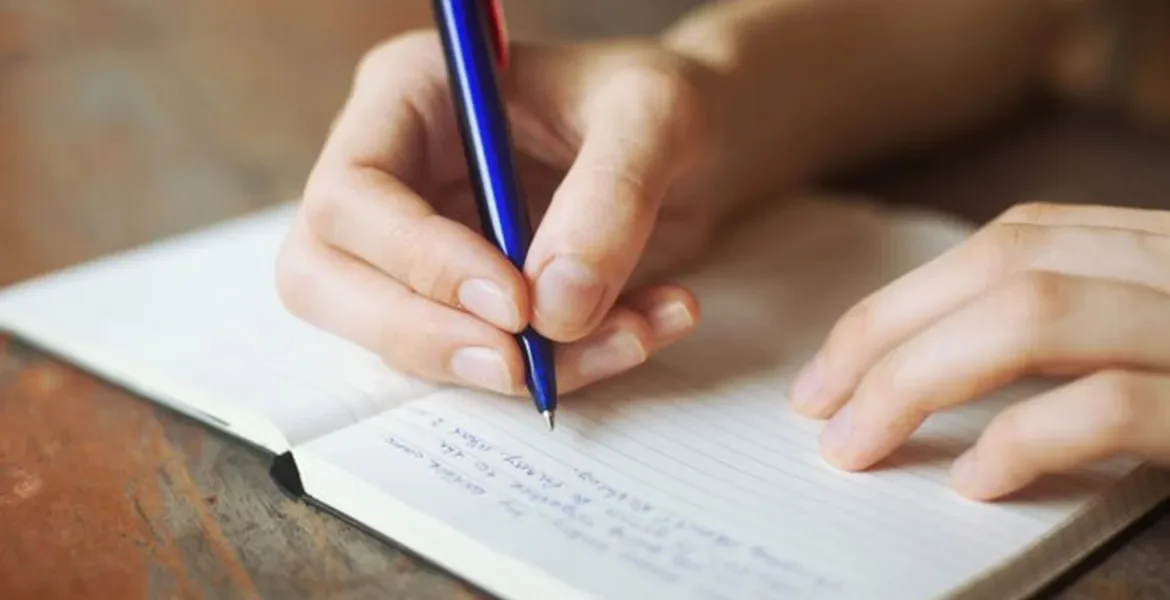
30 Spiritual Journaling Prompts for Self-Discovery
Spiritual journaling prompts are questions and ideas to explore spirituality and get to know yourself better.
I often include different journal prompts in my work because I think it’s key to continually maintain a dialogue with ourselves. It’s part of building a healthy relationship, or rather a friendship, with yourself.
As Eleanor Roosevelt said, “Friendship with oneself is all important, because without it one cannot be friends with anyone else in the world.”

The Spirituality of Soil: How Gardening Rewires Your Brain for Peace
Getting your hands in the dirt may produce serotonin in the brain and combat depression, which would be no surprise to the monks and Zen masters of old.
What if the most potent mood-enhancing medicine was right beneath our feet, pulsing away unnoticed in the soil?
Mycobacterium vaccae is a non-pathogenic soil bacterium that has the potential to redefine our concept of how the earth affects human well-being.

5 Books on Love that Could Transform Your Relationship
These five books explore aspects of love through lenses of anger, masculinity, family systems, and the body, along with its familiar joys and pains.
In Western culture, romantic love is a fantasy, a fairy tale. We’re often told we simply need to meet “the one” and everything will fall into place for our happily ever after.
But the truth is, love with a partner takes work; it’s a practice. It’s also a mirror. Love tends to show us to ourselves in various lights—some more flattering than others. Many of us struggle with love because the models we grew up with, including our parents or what we saw on TV, were unhealthy, unhappy, or simply untrue.

Effects of Hidden Disabilities on Driving
What Are Hidden Disabilities and Why Do They Matter for Driving?
A hidden disability, sometimes called an invisible disability, is a medical or mental health condition that isn’t immediately obvious to others. These conditions often have no outward signs, but they can affect a person’s daily life in meaningful ways.
