
When the World Won’t Stop Trembling
Discover how birdwatching, painting, and small acts of truth can become lifelines that anchor us in beauty and connection.
From the moment we open our eyes in the morning, the world presses in. Before our feet hit the floor, the headlines scroll, notifications ping, and images of heartbreak and outrage flood our screens.
It’s there again at night, phone glowing in the dark, until sleep comes in restless fits. The noise is relentless. Chaos everywhere.
I am an educator in the Episcopal church. I work with children, teenagers, and adults in every season of life. And I can tell you: This disorientation is not limited to one generation. Whether you are 13 or 73, the world’s constant tremors reach you. They unsettle you. They unmoor you.
The word unmoored comes from the world of ships. It refers to a vessel that is no longer anchored, drifting wherever the current takes it. That’s how many of us feel today: tossed and pulled, at the mercy of forces beyond our control.
We’ve become skilled at covering it up.
“How are you?” we ask.
“I’m good,” we reply, smiling as though we believe it.
The performance is polished, but often it’s just that: a performance. Underneath, we’re lonely. Or afraid. Or exhausted.
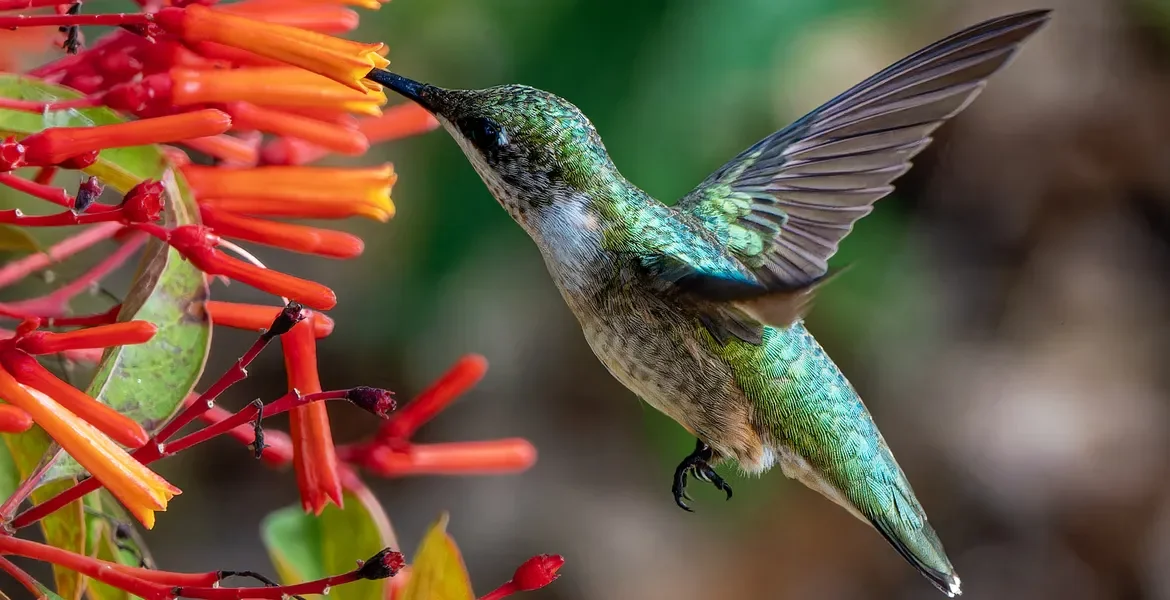
Photo by Roger Hutchinson
The Importance of Nature and Art
I’ve had to be intentional about finding ways to steady myself when the current feels too strong. Two practices in particular have become lifelines: being in nature and making art.
Here in Houston, where summer heat can be suffocating, long walks in the woods aren’t always practical. But whenever I can, I take my camera outside. I watch for the flash of red from a cardinal, the tilt of a bluebird’s head, the landing of a butterfly on a flower. On days when the temperature keeps me indoors, I sit by the big picture window in our living room and watch the birds gather at the feeders.
Something happens when I shift my attention from chaos to these ordinary miracles. I breathe more deeply. My pulse slows. I remember the world is not only trembling—it is also blooming, nesting, migrating, singing.
When I paint, the noise gives way to color. My garage becomes a place where the brush does the talking: bold swaths of red for anger, soft washes of blue for longing, bursts of yellow for hope. I can speak, shout even, without words. When I paint, I’m not performing. I’m telling the truth in pigment and brushstroke.
Both practices, birdwatching and painting, are about paying attention. They are about choosing, in the midst of noise, to notice something else. Something real. Something beautiful.
Fear and Division
It’s no secret: The U.S. is fractured. The entire world is trembling. There’s war and injustice, political division, and environmental crisis. There’s personal grief layered on top of public tragedy. And many of us are carrying a quiet fear that we might not be okay.
In my work, I see how this reality touches every age group. Children sense it in the way adults move through the world. Teenagers carry an acute awareness of the planet’s fragility and their uncertain place in its future. Adults and elders wrestle with both personal and collective losses.
And through it all, we keep performing. We keep saying “I’m good” because that’s what we’ve been taught. Because vulnerability feels risky. Because we think our worth is tied to how well we keep it together.
But what if we didn’t have to perform?
What if we allowed others to see the cracks in our armor? What if we learned, slowly and gently, that we are loved not for the polished story we present, but for who we are in all our messy, unfinished reality?
I believe this kind of honesty is a spiritual practice. It calls us back to the truth that our value doesn’t come from productivity, perfection, or performance. It comes from the simple fact that we are human beings, created and beloved.
Nature reminds me of this. A tree does not apologize for shedding its leaves in winter. A bird does not pretend it isn’t tired from migration. They live the season they are in. They rest when they need to. They sing when the moment calls for song.
Art reminds me, too. A canvas in progress is not less valuable than a finished painting. The unfinished work is where the learning happens, where the truth is found.
Surviving the Chaos
I don’t have a three-step plan for surviving the chaos. I’m still figuring it out myself. But I know that small acts of attention—watching the birds, painting with abandon, sitting quietly under a tree—they are not small at all. They are anchors in the storm.
So, here is my invitation: Find your own window, your own feeder, your own brush and palette. Step outside, even for a few minutes. Notice the way the light changes as the sun moves across the sky. Notice the laughter of a child, the texture of a stone, the scent of rain on hot pavement. Let these things remind you that you are still here.
And when someone asks, “How are you?” maybe you’ll still say, “I’m good.” Or maybe, just maybe, you’ll take a breath, look them in the eye, and say, “It’s been a hard week.” You might be surprised at the relief that comes with telling the truth. You might be even more surprised at how it opens the door for someone else to tell theirs.
The world may keep trembling. But we don’t have to face it alone. In the smallest acts of beauty and truth, we may remember how to steady one another.
by Roger Hutchison
