
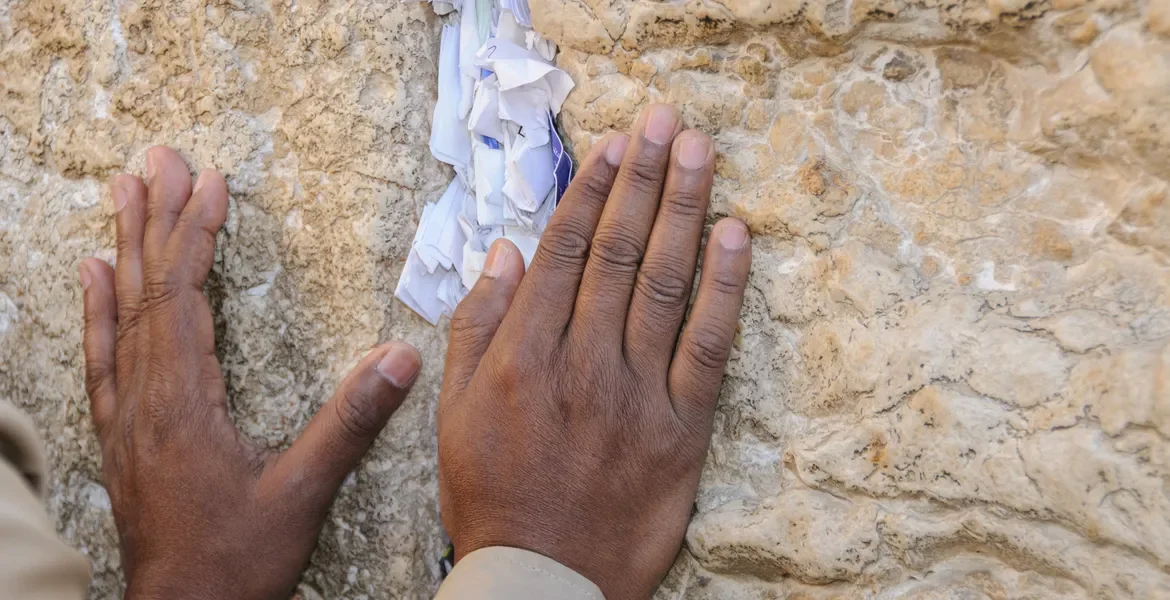
Writing from Israel two years into the Gaza war, Mark Ginsberg observes that trauma and faith, carried together, haven’t canceled each other out, but have instead produced something more stubborn: a faith that argues with God in one breath and prays in the next.
The Spirituality & Health interview with author Tia Levings on healing from religious trauma describes a particular injury: the high-control church communities that broke her and others, leaving them with a faith that hurts to touch. Her account of the long recovery afterward and learning to belong to oneself reached me in Efrat, Israel, in the Judean hills, where I write about faith and daily life in a country that is two years into war.
Our trauma in Israel has a different author, but the question underneath is the same: What happens to faith when the thing that wounded you stands in the middle of your own story, and the exit door leads out of the only home you have?
The Wound and the Prayer
Israel’s wound is national, which makes it strangely hard to see. It arrives as a missile alert siren on a phone app that everyone silences out of exhaustion; as the friend who cannot sit through a happy movie; as the child who sleeps facing the door of the blast-reinforced shelter room that Israel has required in every new home since the 1990s. Researchers have begun documenting the scale, and the early findings are what anyone here could predict: Exposure is nearly universal, symptoms are widespread, and personal resilience is doing an enormous amount of quiet load-bearing.
The psychiatric system, built for a peacetime country, was overwhelmed within weeks after Hamas invaded southern Israel on October 7, 2024. Volunteer organizations stepped into the space the clinics could not reach, and neighbors began delivering care to neighbors with whatever training they could acquire in a hurry.
That is the setting for a curious fact: The synagogues did not empty. They filled. Not with denial and not with the hard certainty the cameras expect, but with people carrying both things at once—the wound and the prayer—the way one carries groceries and a sleeping child: carefully, adjusting the grip constantly. The Israeli congregations I know have become, without anyone planning it, the largest informal trauma support network in the country. And they did it with the tools Levings’ wounded Christian comrades had to leave behind: liturgy, psalms, and a minyan of witnesses.
What the System Cannot Hold
The state is racing to train therapists, but it will not be fast enough. Some of what the war broke will be carried for decades. But the interesting frontier is what the formal system cannot name. When a quarter of a congregation is saying kaddish, the mourner's prayer recited by the bereaved and answered aloud by the whole community, the community is doing work that no referral pathway reaches. When the whole country shows up in shifts with meals and rides and the willingness to sit in silence next to someone whose son is a hostage, that is a mental health intervention wearing different clothes. The volunteers are not therapists and would not claim to be. They are something older: a community refusing to let its wounded carry on alone, which is, clinicians quietly admit, half the cure.
The Faith That Remains
Tia Levings’ Christian cohorts left communities that used God as a weapon. Israel presents a painful mirror to that experience: a country that used to assume God—or at least history—was roughly on its side. It no longer can. What has surprised sociologists and rabbis alike is that the loss of that assumption did not produce departure. Instead, it produced a leaner, more stubborn faith, the kind that argues with heaven in one breath and prays to it in the next; the kind the Psalms specialized in all along. The visitors who keep coming to Jerusalem expecting to find a city of grief report that they have found a city mid-argument with its God, and alive.
Trauma and faith, carried together, turn out not to cancel each other; they weight each other. The wound keeps the prayer honest, and the prayer keeps the wound from having the last word. That is not a formula any of us would have chosen. But it is the one the season handed us, and on the hill where I live, it is holding.
by Mark Ginsberg
