
Vegetarians in a Strange Land
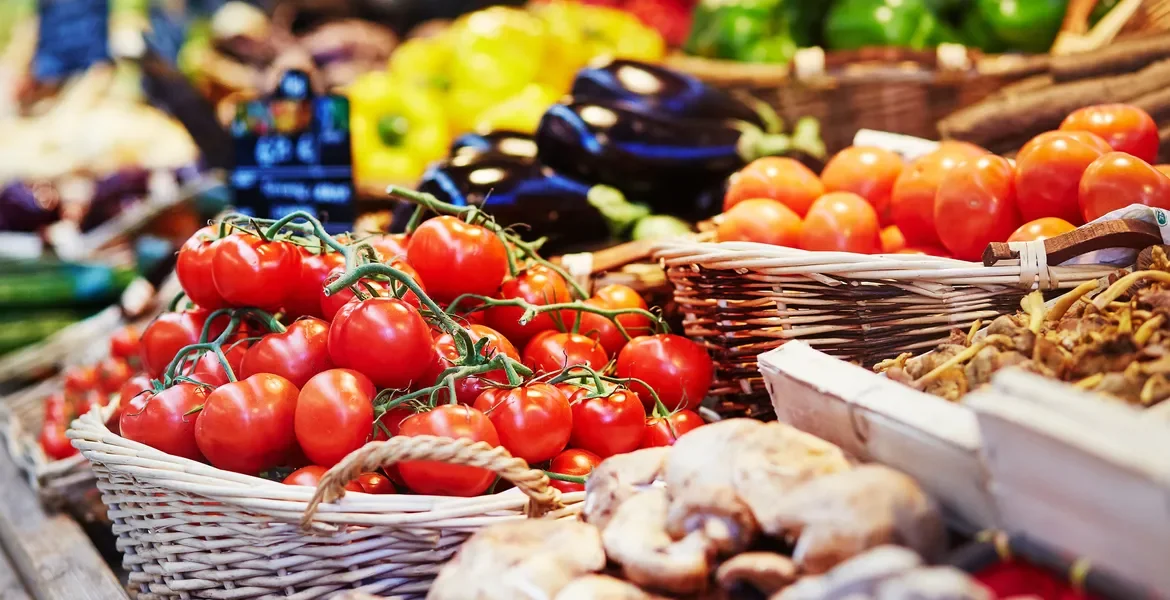
In a meat-obsessed corner of rural France, an Asian expat and her French husband quietly rebel against wild-boar culture—one colorful, improvised vegetarian plate at a time.
Saturday mornings move like clockwork in Charleville-Mezieres, the small French town where I have been living for the past three years. That’s when the marché couvert, the covered market, is open.
First, I go to Gaetan’s table to see what fruits or nuts or mushrooms he’s collected from the forest. I tell him to save me a bottle of his cold-pressed apple juice, which I will pick up on my way out.
Then I saunter to Adeline’s stand on the opposite side. We kiss and hug and chat a bit before she gives me a rundown of the latest honey she’s made with wild plants and flowers from the region.
Across from Adeline is her former lover, Fred the gardener, who brings the freshest arugula leaves, carrots (still wrapped in soil), and Asian herbs. In the autumn and winter, he’s got a variety of pumpkins and squash, one of which he labels “spaghetti” with fibers that coil out after baking in the oven.
Of course, I could never forget old man Alain, who winks when he sees me lining up at his large vegetable counter. When I see a sign on the boxes that says notre production—our produce—I pick the best and call it a day.
I rely on my Saturday excursions to the market to stock up for the week ahead. As it’s the only place where I can get fresh and organic produce, it is heaven-sent for full-fledged vegetarians like me and my husband.
Land of the Wild Boar
In the eyes of our fellow residents, it may not be unusual to see an Asian like me shun meat or fish. But when it comes to my husband, who was born and raised in this secluded northeast part of France close to the Belgian border, he is seen as betraying the symbolic spirit of the wild boar of the Ardennes region. We have very few friends who invite us over for dinner. Rarely do we go out to eat; if we do, it’s the usual margherita pizza. One or two restaurants are willing to whip up a veggie dish if you make a reservation a week in advance.
Learning vegetarian recipes and inventing new ones has been a necessity for us. I’m the reluctant housewife who wishes Trader Joe’s were just around the corner. Back in Manila, I could easily order meals from an app when I felt lazy. But here, my French husband likes to breathe down my neck while I’m cooking, giving me instructions on slicing and timing the food.
I whip up his lunches au pif, as they say in French—something I make up out of the blue or out of habit. I combine vegetables depending on their colors. I sauté thin slices of red cabbage with carrots, adding a dash of balsamic vinegar. I steam broccoli with fleur de sel (salt) or quickly stir-fry it with thin slices of bell peppers. In summer I make pesto sauce with basil leaves and ground cashews, and tomato sauce with yellow tomatoes and dehydrated soya bites. For supper in winter, a soup of butternut squash mixed with sweet potatoes a la velouté is our staple.
Our vegetable meals are always paired with tofu or tempeh picked up from the organic store across the street. Each day, my husband makes sure we’re meeting our protein needs, making daily life feel balanced and light.
Not All the French Are Fit
Les Ardennes was economically vibrant in the distant past when factories and foundries abounded. They’ve been slowly folding since the 1980s, one by one casting a grim outcome for the future. Still, this region, situated on Europe’s crossroads to Belgium, the Netherlands, and Germany, can be a paradise to outsiders. Along the River Meuse runs a bicycle path, aptly called the voie verte or the “green track,” and it’s my town’s selling point for tourists. I can’t get enough of being close to nature, the forests so near we can go hiking anytime.
The locals often take these opportunities for granted. I can’t, and I don’t. This is part of living the healthy life I’ve chosen.
I was surprised when the local library recently held a conference on sustainable food. Flipping through slides of statistical evidence, the speaker stopped short of encouraging her audience, made up of men and women in their 50s and older, to gradually switch to healthy eating or to convert to vegetarianism. The idea is radical in this part of France.
The French are known for their healthy cuisine, but our region is one of two with an obesity rate of 20 percent. Many were alarmed by a national survey showing that one out of five children of underprivileged families are overweight. When I walk around town, I often see big-bellied teenagers whose families can only afford cheap, ultra-processed food from the low-cost supermarkets.
That’s why I consider the sellers at the Saturday market my heroes: the farmers, beekeepers, and bread makers; the woman who produces organic colza and sunflower oils; the brewer who makes ginger beer with fruit flavors. I salute them—I wouldn’t know what to do without them. And if it’s any contribution at all, I support the local economy. Every Saturday. It’s my way of being French.
by Criselda Yabes
