
The Revival of Herbal Medicine
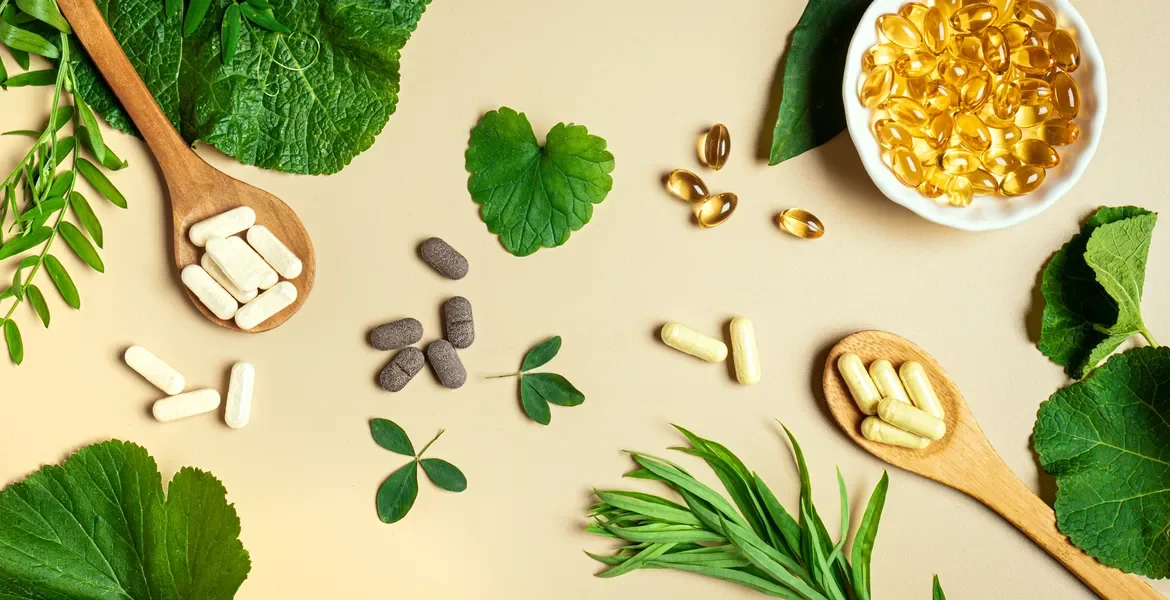
Herbal Medicine
Plants have healed us since before recorded history. Despite suppression, biodiversity loss, and synthetic dominance, herbal medicine is rising quietly in the West.
Herbal medicine is as old as the world itself. Through trial and error, people have experimented with plant remedies, carefully preserving the most effective ones and passing down their knowledge orally. European medicine is said to have begun with Hippocrates (460-377 BCE) and Aristotle (384-322 BCE), whose prevailing ideas from that time period came from India and Egypt. The true origins of herbal medicine, however, remain untraceable.
Although most people today use synthetic medicines, European herbal medicine has persisted, gaining massive popularity in recent years. Many people realize that we originate from nature and that natural remedies often align better with our bodies. About 80 percent of the global population, particularly in developing countries, still relies almost entirely on traditional herbal medicine for their healthcare needs.
A Brief History of Herbal Medicine
Greek and Roman medicine was based on the belief that the world is composed of four elements: earth, air, fire, and water. Each element corresponded to a humor: blood, phlegm, black bile, and yellow bile. These elements also correlated with cold, heat, moisture, and dryness, and each had corresponding herbs that could correct imbalances in the body. Vestiges of medicine from that time still influence modern medicine today.
Before recorded history, in the era of the Druids, wise women across Europe were trained from the age of 7 and initiated as Hexa at 13 or 14. (The Dutch word for witch, by the way, is still Heks.) They learned to cultivate and identify medicinal plants, sing sacred songs, spin wool, grow vegetables and grains, brew psychoactive and medicinal beers, and celebrate seasonal festivals aligned with the moon, sun, and planets—medicinal traditions that can still be found in areas of the Amazon rainforest and in Africa.
In monasteries, medicinal plants were cultivated and their effects documented. A well-known herbalist from this period, Hildegard von Bingen (1098-1179), received visions about herbalism and medicine and wrote about her discoveries. The Swiss alchemist and physician Paracelsus (1493-1541) introduced important ideas regarding dosages of medicinal plants, famously stating that the dose determines whether something is a poison or a medicine.
The Greek historian Thucydides (430 BCE) noted that people who survived an epidemic did not get sick again. Later, medical researchers developed germ theory, identifying microorganisms as disease agents.
The Dutch scientist Antonie van Leeuwenhoek (1632-1723) first observed bacteria using a microscope. Then there was Louis Pasteur (1822-1895), who developed pasteurization and vaccines, which continue to save lives to this day.
Between 1480 and 1700, mass hysteria and the Inquisition led to the witch trials in Europe. Wise women (and sometimes men) with herbal knowledge were often accused of witchcraft and were burned, hanged, or drowned, resulting in the loss of vast amounts of ancient plant knowledge.
In Europe, the Church replaced this holistic, nature-based knowledge tradition with a dualistic worldview centered around God and the devil. Only fragments of the herbal tradition survived, preserved among rural communities and, paradoxically, in monasteries, where monks copied ancient Greek and Latin texts with herbal remedies, often recording the wisdom they learned from “witches.” Despite the witch burnings and various modern attempts to suppress and ban herbal medicine, it never completely disappeared and has continued to exist underground.
Finding New Drugs in Nature
New plants are still being discovered and added to the European herbal medicine arsenal. Old plants are rediscovered, and phytotherapy—the rational treatment of ailments with plants—continues to evolve, with new monographs on the medicinal properties of plants published daily. While some people consider herbal medicine an alternative therapy, many modern prescription drugs originated from ancient medical systems.
The word pharmacy originates from the Greek apotheca meaning “storage place,” where medicinal herbs were kept. Many of the self-care medicines sold in modern pharmacies are plant-based. Their classification status varies by country—some are sold as supplements, others as medicines. Some other natural plants are considered illegal drugs and are banned.
Western medicine also utilizes fungi and mushrooms. A major breakthrough was the development of penicillin in 1928 by the Englishman Alexander Fleming (1881-1955), who discovered that mold emits an antibacterial substance. This powerful antibiotic has saved millions of lives.
Medicine continues to search for new drugs, many of which are likely to be hidden in nature. The discovery of curare, a poison from the Amazon, revolutionized anesthesia, significantly reducing mortality rates in surgeries.
Indigenous populations rarely benefit from these discoveries. Knowledge of these herbal remedies is taken from the country of origin without gratitude or recognition; then they are copied and integrated into a profit-driven model—predictably combined with a patent—for use in the Western medical world. We utilize the knowledge, but we don’t fully understand how it was originally acquired.
A Trend Toward Holism in the West
European holistic herbal medicine addresses both the causes and symptoms of diseases, while modern medicine primarily focuses on symptoms and symptom management. Western medicine is largely concerned with diseases and pathogens, diagnosing them as isolated cases and seeking to change, control, or destroy them. But nowadays, an increasing number of general practitioners in the West are embracing a more holistic approach to medicine. Following Ayurveda and Siddha medicine in India and traditional Chinese medicine (TCM), Western doctors are increasingly delving into clinical herbalism and ancient holistic plant medicine.
Despite scientific advancements, medicine remains a field in development, with the search for cures for cancer and other diseases ongoing. Many of the medicines yet to be discovered will likely come from plants and fungi, underscoring the importance of maintaining biodiversity, which increases the chances of discovering molecules that can help us far beyond what can be synthetically replicated in a lab.
Plants and mushrooms are often our greatest allies in the quest for curing disease. The revival of herbalism is a reason for hope in these times—a reemergence that is not driven by the elites of medicine nor marketed as sensational breakthroughs, but rather blooms quietly in underground movements and in the cracks of our culture.
by Wouter Bijdendijk, M.A.
